
SAN, NAS and flash arrays
Complete enterprise arrays and controller pairs with installed options, connectivity and media inventory.
ENTERPRISE EQUIPMENT REVIEW
LAeCycle evaluates enterprise storage arrays, controllers, disk shelves, backup appliances and tape systems while helping organizations define drive handling, data destruction and documentation requirements.
Provide a hardware inventory for an independent assessment. Purchase, processing, pickup and any fees are confirmed after review.
Product families are examples only. LAeCycle independently evaluates generation, configuration, condition, quantity, location and current market demand. Brand names identify equipment and do not imply manufacturer affiliation.
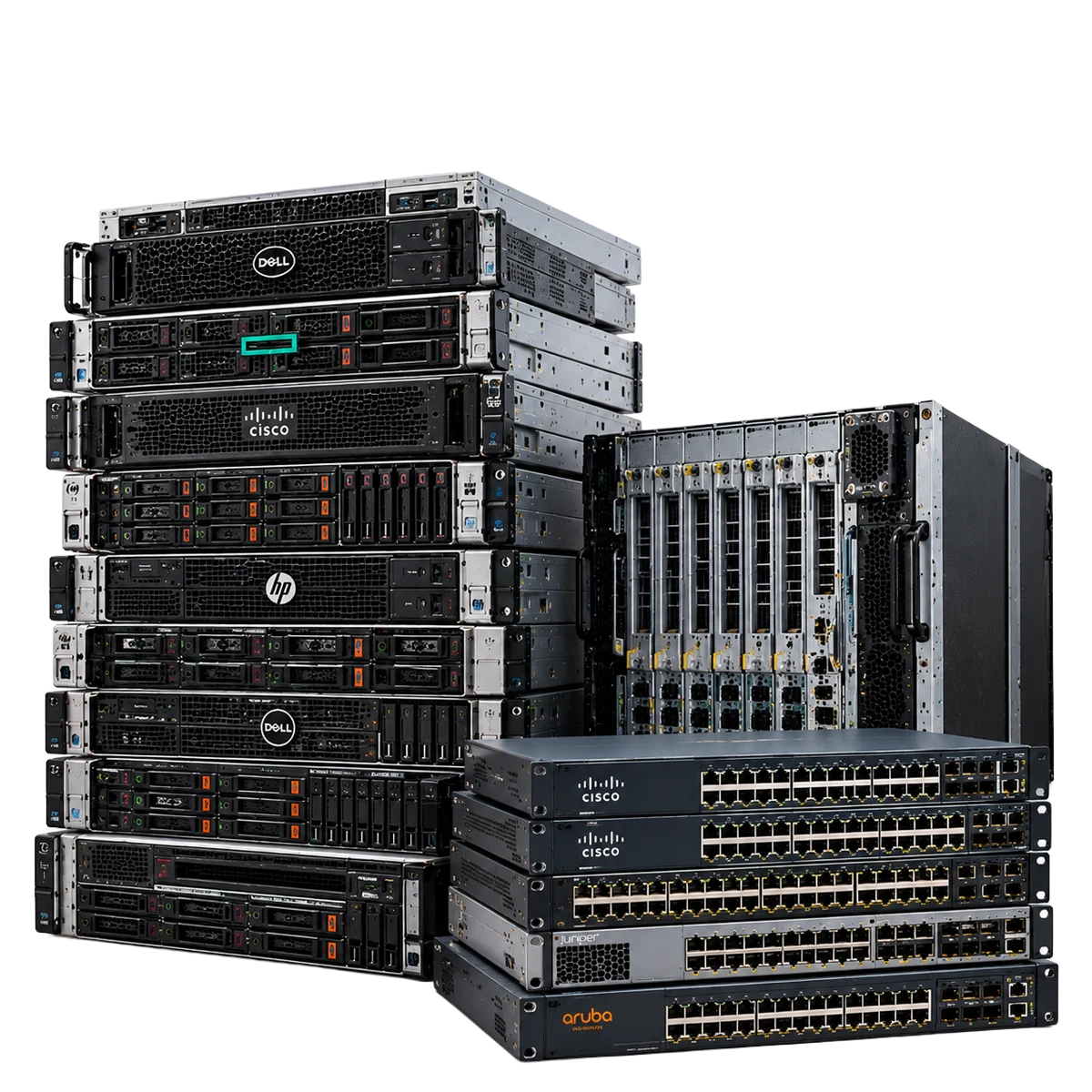
Complete enterprise arrays and controller pairs with installed options, connectivity and media inventory.
Expansion shelves, enclosures, controllers and drive trays, with populated and empty bays identified.
Backup appliances and tape libraries, with retained media and release requirements identified separately.
Examples include Dell EMC PowerStore, PowerMax, Unity and Data Domain; NetApp AFF and FAS; HPE Alletra and Nimble; Pure Storage FlashArray and FlashBlade; and IBM FlashSystem. Identify the actual model and generation, not only the family name.
Complete controller pairs, populated shelves and documented configurations can be more useful for valuation than isolated enclosures. Include drive counts and interface details. If media must be destroyed or retained, that decision may change the reusable configuration and potential value.
Purchase is not guaranteed. Manufacturer, model, generation, configuration, condition, quantity, location, logistics and current demand determine eligibility. Equipment without resale value may still be considered for reuse, parts recovery, ITAD or responsible recycling.
Complete manufacturer names, model numbers and part numbers identify the equipment and its generation.
Processors, memory, storage, modules, licenses and installed options may affect value.
Working status, service history, completeness, cosmetic condition and visible damage are considered.
Matching quantities, rails, power supplies, modules, trays and accessories may improve project value.
Pickup access, loading, packaging, distance and scheduling affect project costs.
Final value depends on age, resale potential, secondary-market demand and transportation cost.
Not every asset has resale value. Equipment that does not qualify for buyback may still be eligible for reuse, parts recovery or responsible electronics recycling.
Storage racks and populated shelves can be heavy. Describe dimensions, rack positions, floor access, docks and available lifting equipment. Do not dismantle or ship an active array until the owner has confirmed shutdown, data retention and removal responsibilities.
Review Southern California project coverageInstalled drives, cache devices and backup media require an explicit handling decision before transfer. Agree on the sanitization or destruction method, chain of custody and reporting level for each media group. A hardware buyback review does not automatically include data destruction or certificates.
Identify storage media and configuration data before transfer. NIST SP 800-88–aligned sanitization and physical destruction by punching or crushing are separately scoped services; standard recycling or a purchase review does not automatically include them. Agree on media retention, chain of custody and any fees before collection.
Serialized inventories, Certificates of Data Destruction, environmental reports and Client Portal documentation are available when included in the confirmed service scope. Tell us which records your organization requires so the processing and reporting plan can be agreed in advance.
Explore separately scoped data destructionFREQUENTLY ASKED QUESTIONS
LAeCycle evaluates enterprise storage arrays, controllers, disk shelves, backup appliances and tape systems while helping organizations define drive handling, data destruction and documentation requirements. Inventory each array, controller, shelf and installed drive group separately. Include quantity, condition and location so the equipment can be reviewed alongside packaging, data and transport requirements.
Complete controller pairs, populated shelves and documented configurations can be more useful for valuation than isolated enclosures. Include drive counts and interface details. If media must be destroyed or retained, that decision may change the reusable configuration and potential value. Purchase is not guaranteed. Manufacturer, model, generation, configuration, condition, quantity, location, logistics and current demand determine eligibility. Equipment without resale value may still be considered for reuse, parts recovery, ITAD or responsible recycling.
Storage racks and populated shelves can be heavy. Describe dimensions, rack positions, floor access, docks and available lifting equipment. Do not dismantle or ship an active array until the owner has confirmed shutdown, data retention and removal responsibilities.
Installed drives, cache devices and backup media require an explicit handling decision before transfer. Agree on the sanitization or destruction method, chain of custody and reporting level for each media group. A hardware buyback review does not automatically include data destruction or certificates. Serialized inventories, Certificates of Data Destruction, environmental reports and Client Portal documentation are available when included in the confirmed service scope. Tell us which records your organization requires so the processing and reporting plan can be agreed in advance.
The review can separate reusable equipment from items better suited to parts recovery or responsible recycling. Acceptance, processing fees and logistics are confirmed before transfer. If storage media is present, its handling must be specified separately even when the surrounding hardware has no resale value.
REQUEST EQUIPMENT REVIEW
Include model numbers, quantities, condition, location and requested services. Attach an inventory or equipment photos when available.
Call (424) 209-4080Purchase, pickup, data services, documentation and any fees are confirmed after project review. Do not include passwords, patient or customer records, or sensitive device contents.
Include models, quantities, condition, location and requested services. Avoid sensitive records and credentials.
Loading your service request form…