
Secure Handling
Protect devices and storage media from unauthorized access while they are collected, transported, stored and processed.
HIPAA-ALIGNED DATA SECURITY
Protect Patient Information Through Final Device Disposition
Healthcare organizations must protect electronic protected health information throughout equipment collection, transportation, storage, sanitization and disposal.
LAeCycle provides secure data erasure and physical storage-media destruction for healthcare computers, servers, hard drives, SSDs and other data-bearing devices. On-site, off-site and witnessed service options are available based on project requirements.
DEVICE AND MEDIA CONTROLS
The HIPAA Security Rule requires covered entities to establish policies and procedures for the final disposition of electronic protected health information and the devices or media on which it is stored.
Procedures must also address the removal of ePHI before electronic media is released for reuse.
45 CFR § 164.310(d)(2)(i)–(ii) · HHS guidanceProtect devices and storage media from unauthorized access while they are collected, transported, stored and processed.
Select a method appropriate for the media, information sensitivity, intended disposition and risk of unauthorized recovery.
Do not release electronic media for internal reuse, resale, donation or other transfer until ePHI has been appropriately removed.
Document disposal responsibilities, approved methods, verification requirements and the personnel authorized to handle data-bearing equipment.
HIPAA does not require one universal destruction method for every device. The organization must select and document safeguards appropriate to its risks and circumstances.
HEALTHCARE ORGANIZATIONS
LAeCycle supports healthcare organizations with different equipment volumes, security requirements and documentation needs.
DATA-BEARING EQUIPMENT
Patient information may remain on obvious storage devices as well as computers, clinical workstations and connected systems. Include every data-bearing component in the project scope before equipment leaves organizational control.
Desktop computers, laptops, thin clients, nursing-station systems and administrative workstations.
Application servers, file servers, storage arrays, NAS systems and data-center hardware.
SATA, SAS and NVMe drives, external drives and removable solid-state storage.
Tablets, smartphones, handheld scanners and portable clinical technology.
LTO tapes, backup cartridges, USB drives, memory cards and other removable media.
Data-bearing computers and storage components connected to diagnostic, imaging, laboratory or patient-care equipment.
Clinical and laboratory equipment must be disconnected, legally transferable and free of biological, pharmaceutical, chemical or radioactive contamination before acceptance.
MEDIA-SPECIFIC METHODS
The correct method depends on the media type, condition, sensitivity of the information and whether the equipment will be reused or permanently retired.
Software-based sanitization may be appropriate for supported, functioning media when the organization intends to retain or release the equipment after verified processing.
Supported encrypted media may qualify for cryptographic or other purge procedures when the method is appropriate, authorized and validated.
Physical destruction may be selected for failed, damaged, unsupported or permanently retired storage media when reuse is not intended.
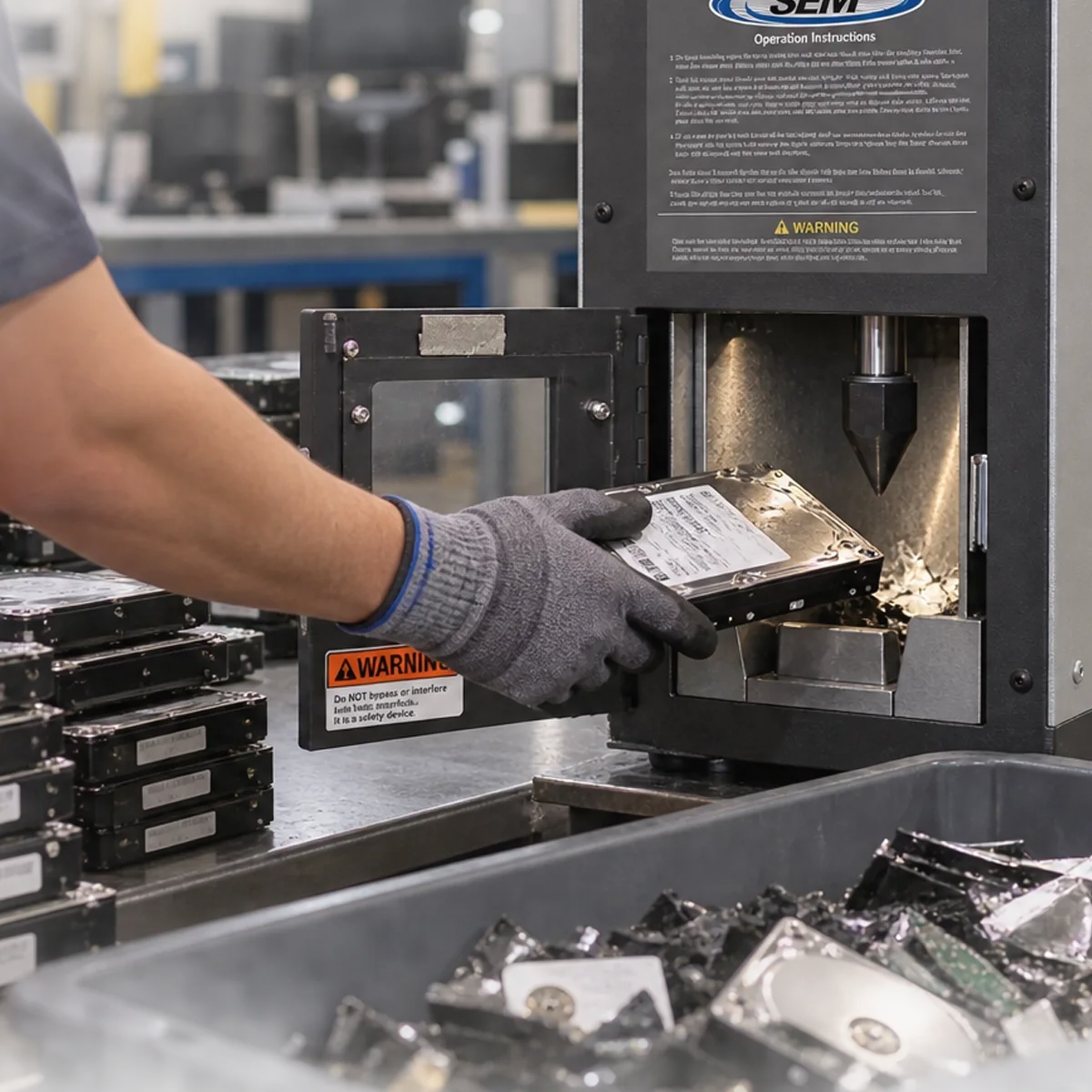
LAeCycle uses methods selected for the media and confirmed project scope. Available services include secure erasure, cryptographic erase, degaussing for supported magnetic media, and physical destruction. Drive punching and crushing are described as physical hard drive destruction.
MEDIA SANITIZATION GUIDANCE
NIST Special Publication 800-88 Revision 2 provides guidance for establishing a media-sanitization program based on information sensitivity, media type, intended disposition and organizational risk.
LAeCycle can perform media-sanitization services in alignment with the confirmed project scope and selected method.
Applies logical techniques to sanitize data in user-addressable storage locations when appropriate for the media and intended disposition.
Uses appropriate logical, cryptographic or media-specific techniques intended to make recovery infeasible using advanced laboratory methods.
Physically destroys media to make recovery of the target data infeasible and leave the media unusable for storing data.
NIST publishes guidance; it does not certify LAeCycle.
View NIST SP 800-88 Revision 2SERVICE OPTIONS
Eligible storage media can be processed at the healthcare organization’s location when required by the approved project scope.
Devices and media are collected through a controlled transfer process and transported to an LAeCycle processing facility.
Authorized representatives may watch eligible media being physically destroyed at their location or at an LAeCycle facility.
Availability depends on media type, quantity, location, access requirements and the selected destruction method.
THIRD-PARTY RESPONSIBILITIES
A healthcare organization may hire an outside provider to dispose of protected health information. When the provider performs the service as a business associate, the parties must establish an appropriate written contract or Business Associate Agreement before protected health information is transferred.
The agreement should define permitted activities, required safeguards, incident reporting, subcontractor obligations and the return or destruction of protected information when the engagement ends.
Read HHS guidance on disposal providersDOCUMENTED PROCESSING
Documentation requirements should be established before service begins. LAeCycle can provide project records based on the agreed scope and equipment processed.
Documents the transfer of equipment or media into LAeCycle’s custody.
Records available serial numbers, asset identifiers and media details when included in the project.
Identifies the approved sanitization or destruction method and applicable verification result.
Documents completed destruction services for the devices or media included in the certificate.
Not every recycling pickup automatically includes serial-number tracking, witnessed destruction or individual certificates. Confirm documentation requirements before scheduling.
A CONTROLLED WORKFLOW
Identify the equipment, media types, locations, security requirements, selected methods and required documentation.
Confirm scheduling, access, packaging, transportation, authorized contacts and any Business Associate Agreement requirements.
Process each eligible device or storage medium according to the approved method and project scope.
Complete applicable verification, inventory records, chain-of-custody documentation and Certificates of Data Destruction as agreed.
IMPORTANT RESPONSIBILITY NOTICE
LAeCycle provides secure handling, sanitization, physical destruction and documentation services based on the agreed project scope.
The healthcare organization remains responsible for identifying devices and media containing ePHI, performing its risk assessment, selecting appropriate safeguards, maintaining required policies, authorizing the disposition method and determining its legal and contractual obligations.
This page provides general information and is not legal advice. Healthcare organizations should consult their privacy, security or legal professionals when establishing HIPAA policies and vendor requirements.
COMMON QUESTIONS
HIPAA requires covered entities to establish policies and procedures for the final disposition of ePHI and the hardware or media on which it is stored. Depending on the media, risk and intended disposition, an organization may select appropriate sanitization or physical destruction.
HIPAA does not mandate one universal method for every hard drive. Appropriate options may include clearing, purging or physically destroying the media based on its condition, information sensitivity, intended disposition and organizational risk.
A factory reset should not automatically be treated as verified media sanitization. The organization should use an approved method appropriate for the device and verify the result before the equipment is reused or released.
When an outside disposal provider performs the service as a business associate, the covered entity and provider must establish an appropriate written agreement before protected health information is transferred. The organization should confirm the provider’s role and agreement requirements before service.
Witnessed physical destruction is available for eligible storage media. Service may be performed at the customer’s location or an LAeCycle facility, depending on the approved scope, quantity and scheduling.
Certificates of Data Destruction are available when included in the service agreement. Documentation requirements should be confirmed before service begins.